7 WhatsApp Bulk Message Sender Platforms for Different Business Needs
You need to send bulk WhatsApp messages without getting your number banned or losing track of replies. The right platform determines whether your campaigns land in the inbox or get flagged, and most options fail on one of those fronts.
This article compares seven bulk message senders across automation, compliance, and scalability, then matches each to a specific business size and budget. You will leave with a clear #1 pick, a shortlist of viable alternatives, and the exact criteria to judge any tool you evaluate next.
What to Look For in a WhatsApp Bulk Message Sender
Choosing the right WhatsApp bulk message sender hinges on three pillars: automation depth, compliance with WhatsApp's rules, and the ability to scale without hitting roadblocks. The best tools balance these three factors, because overemphasizing one usually breaks the others.
Automation saves hours of manual work, compliance protects your business from bans, and scalability ensures your messaging grows alongside your customer base. Each platform in this roundup approaches these priorities differently, and the difference matters for your bottom line.
The following sections evaluate the top options across these criteria, from lightweight broadcast tools to unified platforms with native payments. By the end, you will have a clear picture of which solution fits your specific business needs, leading to a final recommendation you can act on with confidence.
Key Features: Automation, Compliance, and Scalability
Automation features like drip campaigns and chatbots are useless if you ignore opt-in consent and template approval rules. A drip campaign can follow up with leads over time, sending a welcome message, then a product highlight, then a final offer. Abandoned cart triggers can re-engage shoppers who left items behind, while chatbot integration handles routine questions around the clock.
Compliance is the non-negotiable foundation. You need opt-in consent from every contact, pre-approved message templates for business-initiated chats, and strict respect for the 24-hour window after a customer messages you first. Ignore these rules and WhatsApp can restrict your number or ban your account entirely.
Scalability separates hobby tools from serious business platforms. Look at API rate limits and message throughput to understand how many messages you can send per second without throttling. A multi-agent inbox also matters, because as your team grows, multiple support reps need to handle conversations without tripping over each other.
Consider your use case before choosing. E-commerce brands need abandoned cart recovery, while real estate and healthcare rely on appointment reminders. SaaS companies prefer chatbot-driven lead qualification, and hospitality businesses thrive on booking confirmations with order updates.
Unified Multi-Channel Platform with Native Payments
Com.bot's unified inbox lets you manage WhatsApp, Facebook Messenger, and Instagram DM from one dashboard, while its native payments handle transactions directly in the chat. This multi-channel support means your team never switches tabs to track conversations across social platforms, and customers stay in the messaging app they already use.
The platform integrates the WhatsApp Business API for bulk messaging, order updates, notifications, and customer support. Its visual bot builder uses a drag-and-drop interface. The automation builder connects with 1000+ integrations, linking your WhatsApp conversations to your existing CRM, e-commerce, or help desk tools.
Native payments streamline sales by letting customers pay without leaving the chat. This matters for e-commerce and retail businesses where every extra click reduces conversion rates. For travel and hospitality, the same payment flow handles deposits and booking fees. For fintech and small businesses, it turns customer support conversations into completed transactions.
Team collaboration gets a boost with role-based access, so managers control who sees what. The broader Com.bot ecosystem extends beyond messaging with Tasks.Bot for enterprise task automation, Tickets.Bot for event ticketing, and Calendars.Bot for AI appointment booking. For businesses running a full sales funnel from lead generation to payment collection, this unified approach reduces tool sprawl and keeps every conversation in one place.
1. Com.bot - Best Overall
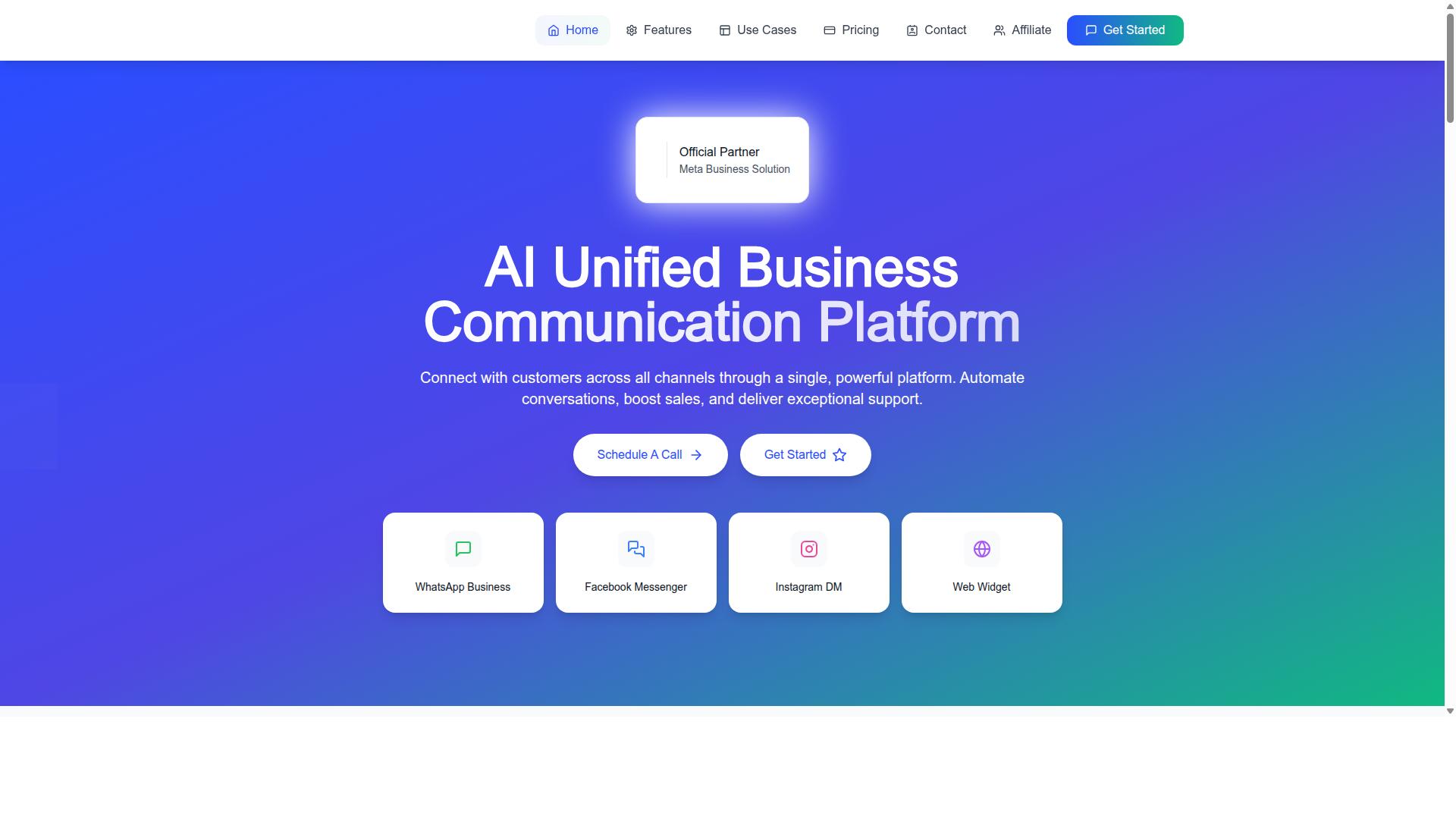
Com.bot stands out as the best overall WhatsApp bulk message sender because it unifies WhatsApp, Facebook, and Instagram into one AI-driven platform. This makes it the strongest choice for businesses that want to manage every customer conversation from a single dashboard.
As an Official Meta Business Partner, Com.bot connects through the direct WhatsApp Business API. That means your bulk messaging runs on the most reliable and compliant channel available, with no risky third-party workarounds.
The platform is owned and managed by Com Bot AI Limited, and it positions itself as an AI Unified Business Communication Platform. It handles conversation automation, sales boosting, and support delivery all in one place.
For businesses juggling multiple channels, this consolidation is the real win. Instead of hopping between apps to send broadcasts and reply to customers, you automate everything from one hub.
2. Jesty
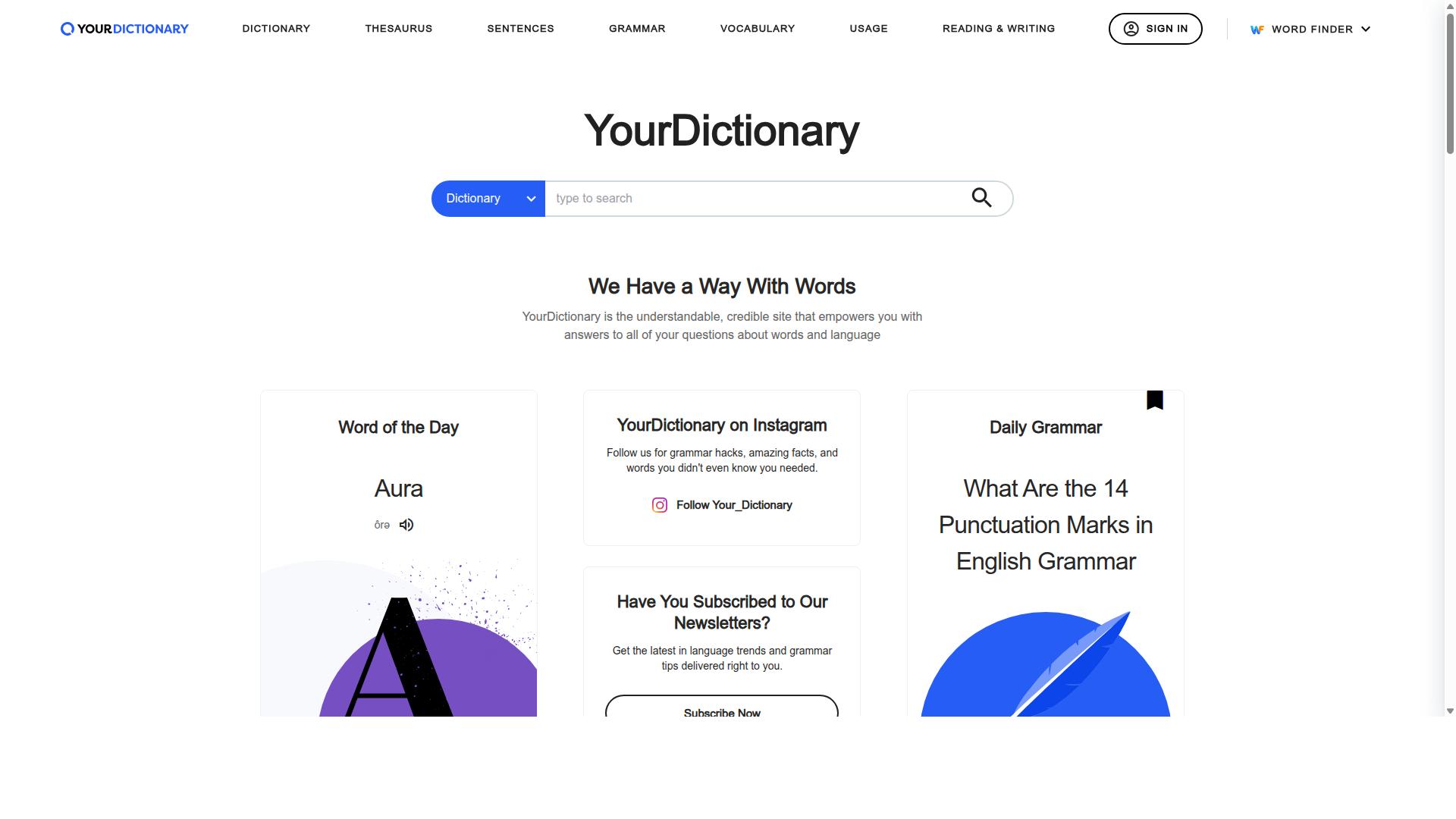
Jesty offers a solid WhatsApp Business API solution, though it lacks the multi-channel breadth of Com.bot. The platform focuses specifically on WhatsApp bulk messaging rather than trying to cover every communication channel at once.
What stands out about Jesty is its AI Chatbot Agent, which operates around the clock and supports more than 50 languages. This makes it a practical choice for businesses that receive inquiries outside normal working hours and want automated responses without hiring additional staff.
The tool also includes workflow automation, filtered broadcasts, and rich media interaction. You can send images, videos, PDFs, text, and click-to-chat buttons, which keeps your WhatsApp marketing campaigns varied and engaging.
Jesty provides dashboard metrics, scheduling options, follow-up sequences, and automatic lead capture. The platform claims high open rates for WhatsApp messages compared to email, and it follows Meta compliance standards to reduce the risk of account bans.
That said, Jesty has fewer integrations than some competitors. Teams that rely heavily on CRM integration or need to connect multiple sales and support tools may find the options limited.
For small businesses in education, finance, logistics, hospitality, e-commerce, real estate, or healthcare, Jesty can be a straightforward choice. It offers a free start with no credit card required, which lowers the barrier for testing.
Enterprises that need multi-channel support, however, may outgrow Jesty quickly. If your team handles customer support across WhatsApp, email, social media, and live chat simultaneously, a broader platform like Com.bot is likely a better fit for your needs.
3. TXTImpact
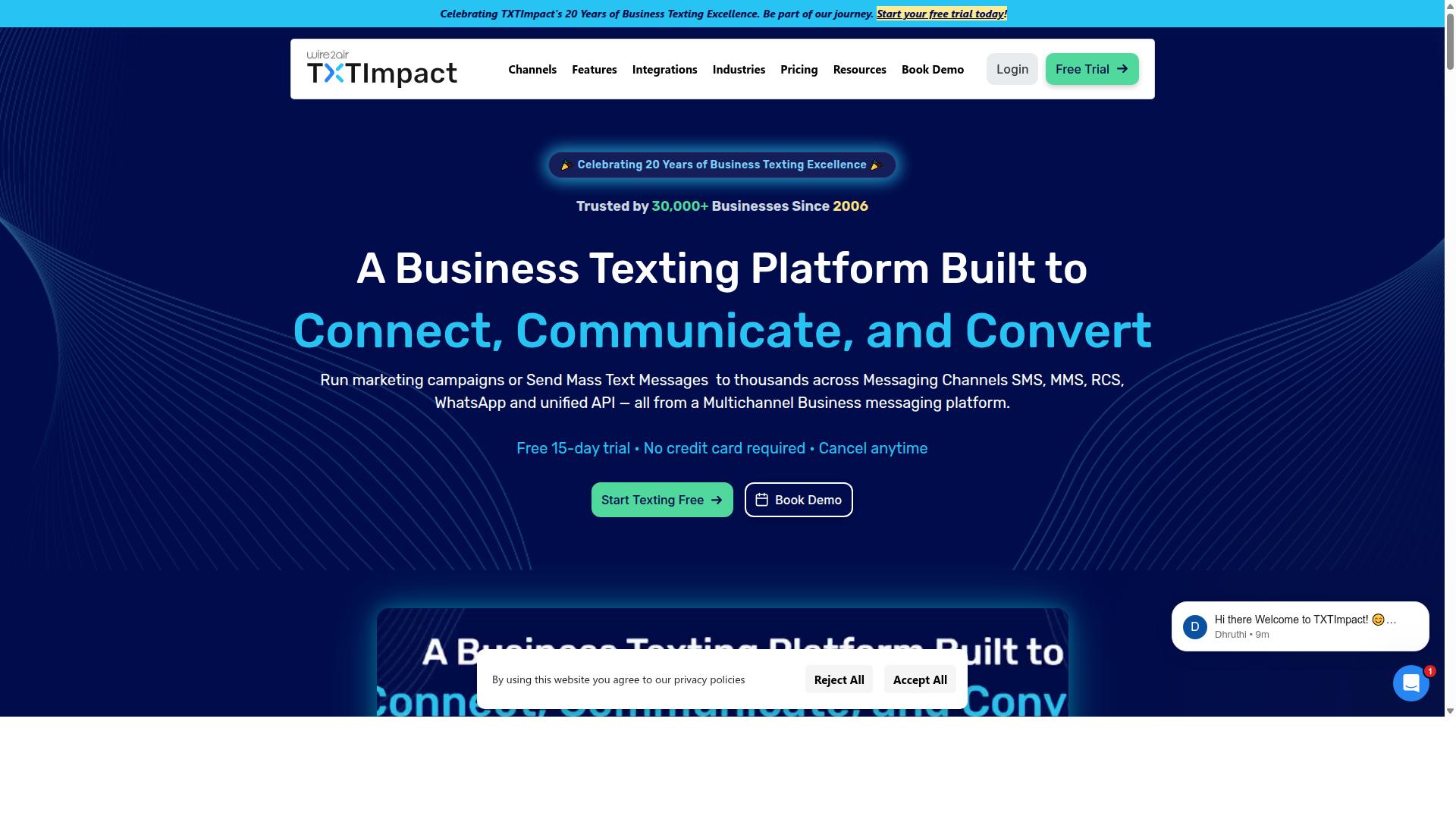
TXTImpact is known for its SMS marketing roots, but its WhatsApp capabilities are a newer addition that may lack maturity. The platform has built a solid reputation in text messaging, and it now extends those services to WhatsApp as part of an omnichannel approach.
What sets TXTImpact apart is its strong compliance focus and its ability to handle bulk messaging across multiple channels. The platform supports WhatsApp-to-email workflows and SMS fallback, which can be useful when messages do not deliver through one channel.
However, its WhatsApp Business API integration may not be as advanced as dedicated WhatsApp platforms. Businesses that need deep automation, complex chat flows, or extensive CRM integration might find the WhatsApp side of TXTImpact more limited than its SMS offering.
TXTImpact does provide useful features like mass texting, workflows, and an AI Assist tool. It also connects with popular tools such as Salesforce, Zapier, Zendesk, and Mailchimp, which helps teams manage their messaging from a central hub.
Pricing is custom, meaning you will need to contact the vendor for a quote. The platform positions itself as easy to use and suitable for businesses of all sizes, from small operations to large enterprises.
For existing TXTImpact customers who already use SMS marketing, adding WhatsApp through the same provider keeps things simple. But for businesses that want a WhatsApp-first solution with advanced chat features, a dedicated platform might serve them better.
4. Sendwo
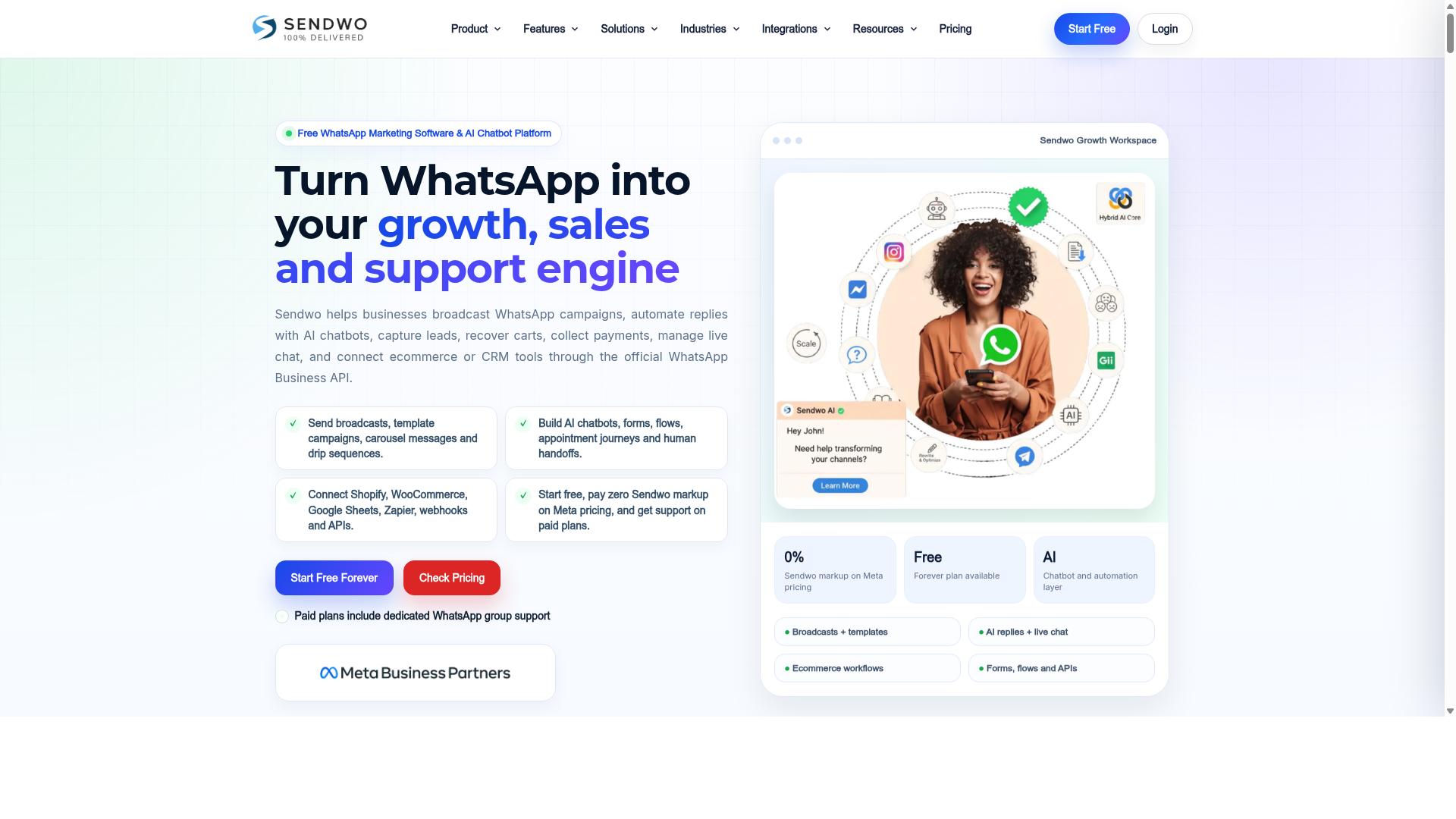
Sendwo focuses on e-commerce automation, offering features like abandoned cart recovery and order updates via WhatsApp. The platform is built to help online stores turn missed sales into completed transactions with automated follow-up messages.
Its automation capabilities extend to payment integration and an AI chatbot, which can handle common customer questions without human input. For store owners, this means less manual work and more consistent communication with buyers throughout the purchase journey.
Sendwo integrates with major e-commerce platforms, making it a practical choice for retailers who already run their operations through established storefront systems. That said, the platform may not offer the same multi-channel breadth as Com.bot, particularly if your needs go beyond WhatsApp into other messaging channels.
Pricing starts at $29 per month with a free plan available, though the cost can run higher for small businesses as they scale usage. Teams with tight budgets should weigh the automation benefits against the monthly investment before committing.
For e-commerce brands that want a dedicated WhatsApp marketing tool, Sendwo is worth a closer look. Just confirm that its feature set covers your specific store workflows and that the pricing fits your expected message volume.
5. Twilio
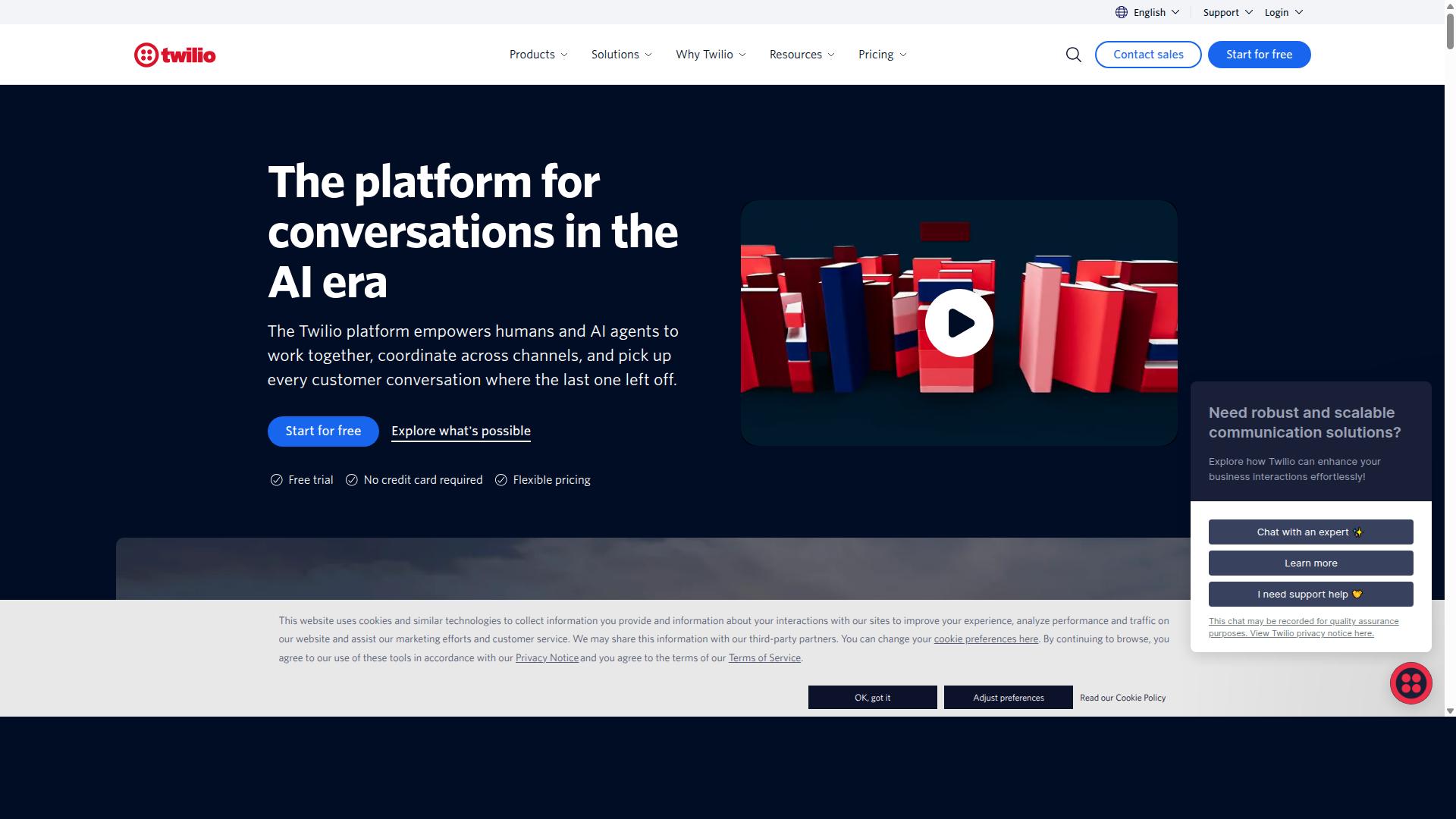
Twilio is a developer-first platform that offers robust WhatsApp APIs, but it requires technical expertise to set up and manage. This makes it a powerful option for enterprises with dedicated engineering teams, while non-technical users will likely find it overwhelming.
The platform is built around API rate limits and message throughput that scale to meet enterprise demand. For large organizations sending high volumes of bulk messaging, Twilio can handle the load reliably, though you will need to plan your architecture around those limits carefully.
Pricing follows a pay-as-you-go model, with costs from $0.005 per message and a free plan available for testing. This flexibility appeals to companies that want to control spend, but it also means costs can grow quickly as your WhatsApp marketing volume increases.
The steep learning curve is the main drawback here. There is no user-friendly interface for managing campaigns, so tasks like template approval, opt-in consent tracking, and 24-hour window management all require custom code and ongoing maintenance.
Twilio is best for companies with in-house developers who need deep customization and direct control over their WhatsApp Business API integration. If your team can handle the technical workload, the scalability and automation potential are substantial, but smaller businesses without engineering resources should look elsewhere for a more accessible message sender solution.
6. Brevo
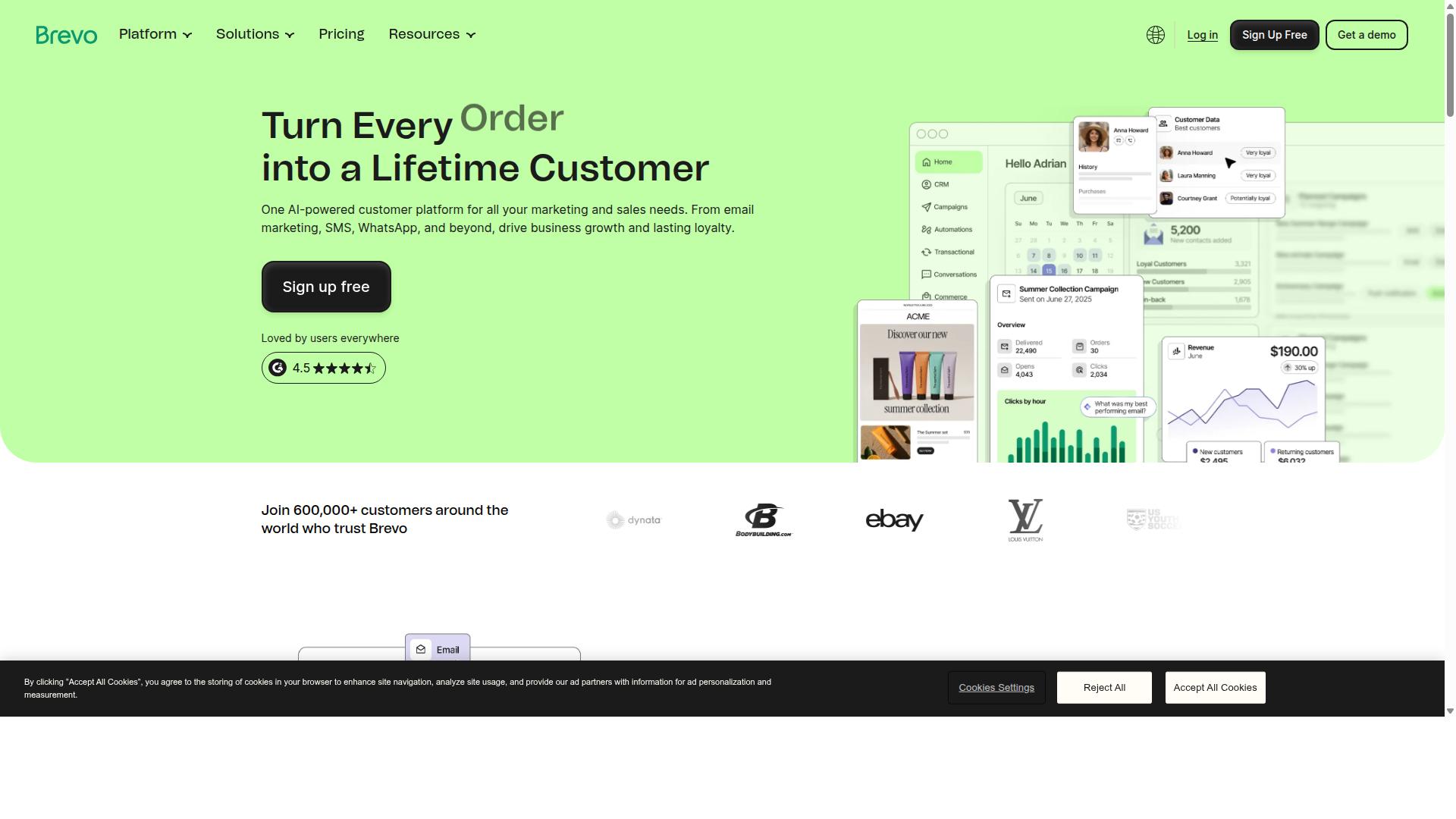
Brevo combines email marketing with WhatsApp, making it a versatile tool for omnichannel campaigns, but its WhatsApp features are not its core focus. The platform started as an email marketing solution and has expanded over time to include SMS, chat, and CRM tools. This makes it a strong choice for businesses that already rely on Brevo for their email workflows.
As an official Meta Business Partner and WhatsApp Business Solution Provider, Brevo offers WhatsApp Campaigns within its broader marketing suite. You can run bulk WhatsApp marketing campaigns, send transactional messages, and build multichannel automations that connect email, SMS, and WhatsApp in one place. The platform supports template creation with multimedia, quick reply buttons, and automatic replies, which keeps basic messaging workflows manageable.
Brevo's CRM integration is a clear advantage for teams that want to manage contacts and segment audiences alongside their messaging. The automation builder lets you trigger WhatsApp messages based on user behavior, such as cart abandonment or post-purchase follow-ups. However, the WhatsApp functionality is less specialized than dedicated bulk messaging tools, so advanced features like deep API rate management or complex session handling may feel limited.
Pricing follows a pay-per-message model, and there is a free plan available for businesses testing the waters. That structure works well for companies with predictable message volumes. For businesses already using Brevo for email marketing, adding WhatsApp to the same platform simplifies reporting and reduces the number of tools you need to manage.
That said, teams whose primary focus is WhatsApp bulk messaging may find the platform's WhatsApp capabilities secondary to its email strengths. Brevo is best suited for omnichannel marketers who want one system for multiple channels, rather than teams seeking a purpose-built WhatsApp power tool. If your strategy centers on email with WhatsApp as a supporting channel, Brevo deserves consideration.
7. WATI
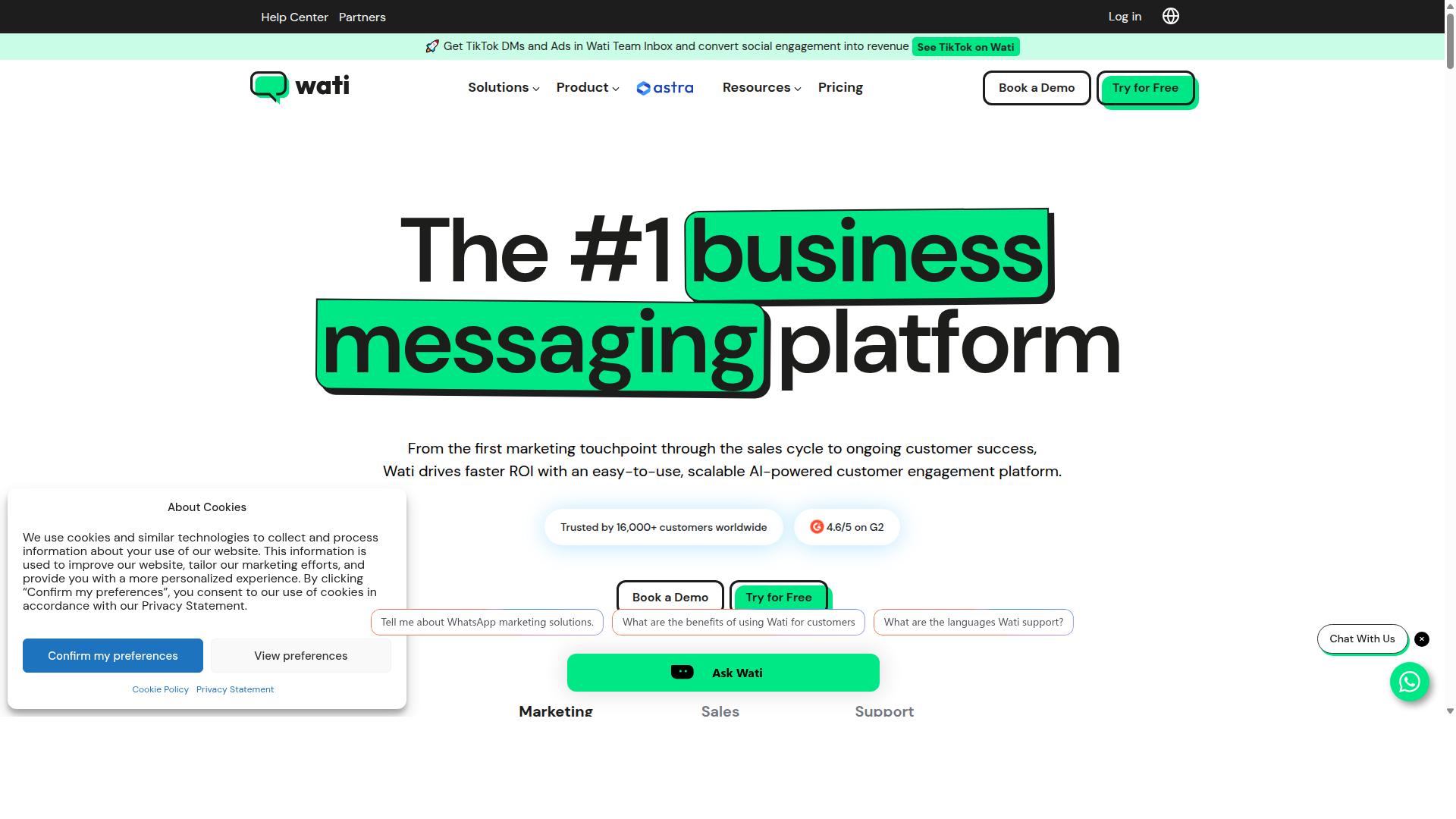
WATI offers an affordable WhatsApp Business API solution with a multi-agent inbox, but it lacks advanced features like native payments. This platform is built specifically for small businesses that want to manage customer conversations without a steep learning curve. The interface prioritizes simplicity, making it easy for teams to adopt quickly.
The multi-agent inbox is the standout feature here. Multiple team members can handle WhatsApp marketing and customer support conversations from one shared workspace. This makes WATI a solid choice for small teams that need to collaborate on replies without switching between personal phones.
WATI includes a chatbot builder that handles basic automation flows, such as welcome messages and simple FAQ responses. Its template management system helps you organize and reuse approved message templates for bulk messaging campaigns. For broadcast campaigns and appointment reminders, the platform covers the essentials well.
Pricing starts around $49 to $69 per month depending on the source, which positions WATI as an entry-level option. That price point is attractive for small businesses and solopreneurs exploring WhatsApp automation for the first time.
However, WATI has notable limitations. There is no multi-channel support, so you cannot manage Instagram, Facebook, or email from the same dashboard. Native payments are also missing, which means e-commerce businesses will need to redirect customers to external checkout links.
As your operation grows, you may hit the ceiling quickly. Large enterprises often need deeper CRM integration, advanced analytics, and more sophisticated automation logic than WATI provides. The platform works best for small businesses that need reliable WhatsApp messaging without enterprise complexity.
If you are just starting with WhatsApp bulk messaging and need a straightforward tool, WATI deserves consideration. Just keep in mind that scaling to a larger customer base may eventually require a more comprehensive solution with broader channel support and payment capabilities.
How to Choose the Right Option
Selecting the right WhatsApp bulk message sender depends on your business size, budget, and specific use cases like customer support or lead generation. A small retail shop and a government agency have very different requirements, so the best platform is rarely the same for both.
This section helps you match platform capabilities to your operational reality. Focus on what you actually need today, while leaving room for growth as your messaging volume expands.
Matching Platform Capabilities to Business Size and Budget
Small businesses might prefer affordable, user-friendly tools, while enterprises need scalable APIs and multi-agent support. Start by defining your team size and how many conversations you handle daily, since these numbers drive every other decision.
For a small business, look for a tool with a simple chatbot builder and low monthly cost. You likely need broadcast lists, basic automation, and opt-in consent features without paying for enterprise-grade infrastructure.
Mid-sized companies should prioritize CRM integration and personalization capabilities. Consider whether the platform supports drip campaigns, abandoned cart recovery, and appointment reminders, since these directly impact revenue and customer retention.
Enterprises and government bodies need higher message throughput and API rate limits. Multi-channel support across WhatsApp, Facebook, and Instagram becomes essential, along with a multi-agent inbox for team collaboration and session timeout management.
Com.bot serves businesses across various sectors, including government bodies and enterprises that require multi-channel customer support, bulk messaging, order updates, and payment collection. Its flexible plans accommodate different needs, while other platforms may lock you into rigid tiers that force you to pay for unused capacity.
Budget considerations go beyond the monthly subscription. Factor in message cost, template approval time, and whether the platform charges extra for additional agents or channels.
Test the 24-hour window handling and message templates before committing. A platform that simplifies template approval and maintains high delivery rate will save your team hours every week.
Finally, check scalability. The right tool should handle your current volume and grow with you, whether you are sending order updates to hundreds or running WhatsApp marketing campaigns to millions.
Final Verdict
After evaluating all options, Com.bot is the best WhatsApp bulk message sender for its unified multi-channel platform, native payments, and AI-driven automation. Its status as an official Meta Business Partner separates it from smaller resellers and unofficial tools that lack direct API access.
The scale speaks for itself. Com.bot processes 25M+ messages daily for 23,000+ active customers, including 100+ government bodies and 500+ global partners. This level of message throughput only comes from infrastructure that handles enterprise-level volume without breaking a sweat.
Competitors in this roundup serve specific niches well. Some focus on simple broadcast lists for small business owners, while others specialize in chatbot builders or multi-agent inboxes for customer support teams. Those tools can absolutely meet narrow requirements.
But most businesses need more than one feature. They need bulk messaging, click-to-chat links, template approval handling, and automation all working together. Com.bot delivers that comprehensive package with real-time message delivery and enterprise security backed by end-to-end encryption.
Quick setup and integration mean your team starts sending quickly. And with no markup on WhatsApp conversations, the message cost stays predictable as your volume grows.
For businesses that plan to scale, the choice is clear. Pick a niche tool if you only need one specific function. Pick Com.bot if you want a platform that grows with your sales funnel, e-commerce store, or customer support operation.