Top 6 AI Task Automation Tools for Cloud Sync
You picked the right tool for cloud sync, but the manual task entry and follow-up still eat your team's hours. That gap between synced files and actual work getting done is exactly where AI task automation should step in. By the end of this article, you'll have a clear #1 pick and a concrete checklist for evaluating native cloud integrations, AI prioritization, and pricing scalability. We'll compare six tools, starting with Tasks.Bot, and give you the criteria to match each one to your team's real workflow. Our breakdown of a Copywriter in Marketing? A Clear Guide covers the related details.
What to Look For in AI Task Automation Tools for Cloud Sync
When evaluating AI task automation tools for cloud sync, you need to weigh native cloud integrations, AI-driven task creation, and pricing scalability to ensure the tool fits your team's workflow. The right choice reduces manual handoffs between your cloud storage and your task management system, saving hours each week.
The core value of these tools lies in their ability to connect your file synchronization with intelligent automation. You want a solution that watches your cloud folders, detects changes, and turns those events into actionable tasks without requiring you to build complex scripts.
Consider how the tool handles sync speed and latency reduction. A tool that processes file changes in near real-time keeps your team working from current information, while slower sync software can cause confusion when multiple people edit the same documents.
Finally, think about the learning curve. The best AI-powered tools feel natural from day one, using natural language processing so you can type instructions like "remind me when the Q3 report updates" and the system creates the right automated workflow.
Native Cloud Integrations and Sync Reliability
Native cloud integrations determine how seamlessly your tasks and files stay in sync across platforms, so look for tools that support popular services like Google Drive, Dropbox, and OneDrive. Deeper integrations mean fewer workarounds and more reliable behavior. A tool with true native support can watch folders, react to file changes, and trigger automated workflows without third-party bridges.
Reliability comes down to several technical factors. Bidirectional sync ensures changes made in your cloud storage reflect in your task system and vice versa. Incremental sync only transfers changed portions of files, which reduces bandwidth usage and speeds up the process significantly compared to full-file transfers.
Conflict resolution is another critical piece. When two people edit the same file, the tool should handle the merge intelligently rather than overwriting work. Common sync errors include permission mismatches, file name conflicts, and partial uploads. Check whether the tool surfaces these errors clearly so your team can resolve them quickly instead of hunting through logs.
Real-time sync capabilities matter for collaborative teams. Look for tools that offer latency reduction through push-based notifications rather than polling for changes every few minutes. Bandwidth optimization features, such as compression and delta sync, also keep your data transfer efficient, especially when working with large media files across multiple cloud storage accounts.
AI Capabilities for Task Creation and Prioritization
AI capabilities vary widely, from natural language processing that turns messages into tasks to machine learning that prioritizes based on deadlines and team workload. The most useful tools understand context, not just keywords. When a teammate writes "can you review the budget file in Drive by Friday," the AI should create a task with the right due date, assignee, and linked file.
Automatic prioritization is where AI algorithms add real value. The system can analyze urgency, dependencies, and current workload to rank tasks. It learns from your behavior over time. If you consistently defer low-priority admin work, the machine learning model adjusts its recommendations to match your actual working patterns.
Intelligent scheduling goes beyond simple reminders. The AI can suggest time blocks for deep work, reschedule tasks when conflicts arise, and group related activities to minimize context switching. These features reduce manual effort dramatically. Instead of spending 20 minutes each morning organizing your day, the tool handles the triage while you focus on execution.
Look for AI that works with your existing communication channels. Some tools can parse emails, chat messages, or meeting notes to extract action items automatically. This turns passive conversations into active task lists without anyone needing to manually transcribe decisions or follow-ups.
Pricing and Scalability for Team Growth
Pricing models vary from per-seat monthly fees to annual plans, so calculate total cost of ownership as your team scales. Per-user pricing is common, but the price per seat often drops as your team size increases. Some tools offer tiered plans where you pay for features rather than headcount, which can be more cost-effective for smaller teams.
Evaluate free trials carefully. A 14-day trial gives you time to test sync reliability and AI accuracy with your actual workflows. Annual discounts typically save 15 to 25 percent compared to monthly billing, but they require upfront commitment, so only choose this if you are confident the tool fits long-term.
Watch for hidden costs. Some vendors charge extra for advanced AI features, increased sync frequency, or additional cloud storage connections. Read the fine print on API limits and data transfer caps, as these can surprise you when your usage grows.
Scalability is not just about price, it is about whether the tool handles increased volume gracefully. Consider how the tool performs with hundreds of automated workflows and thousands of files syncing daily. A tool that works well for a five-person team may struggle with 50 users, so check performance benchmarks and customer reviews for enterprise-scale usage patterns.
1. Tasks.Bot - Best Overall
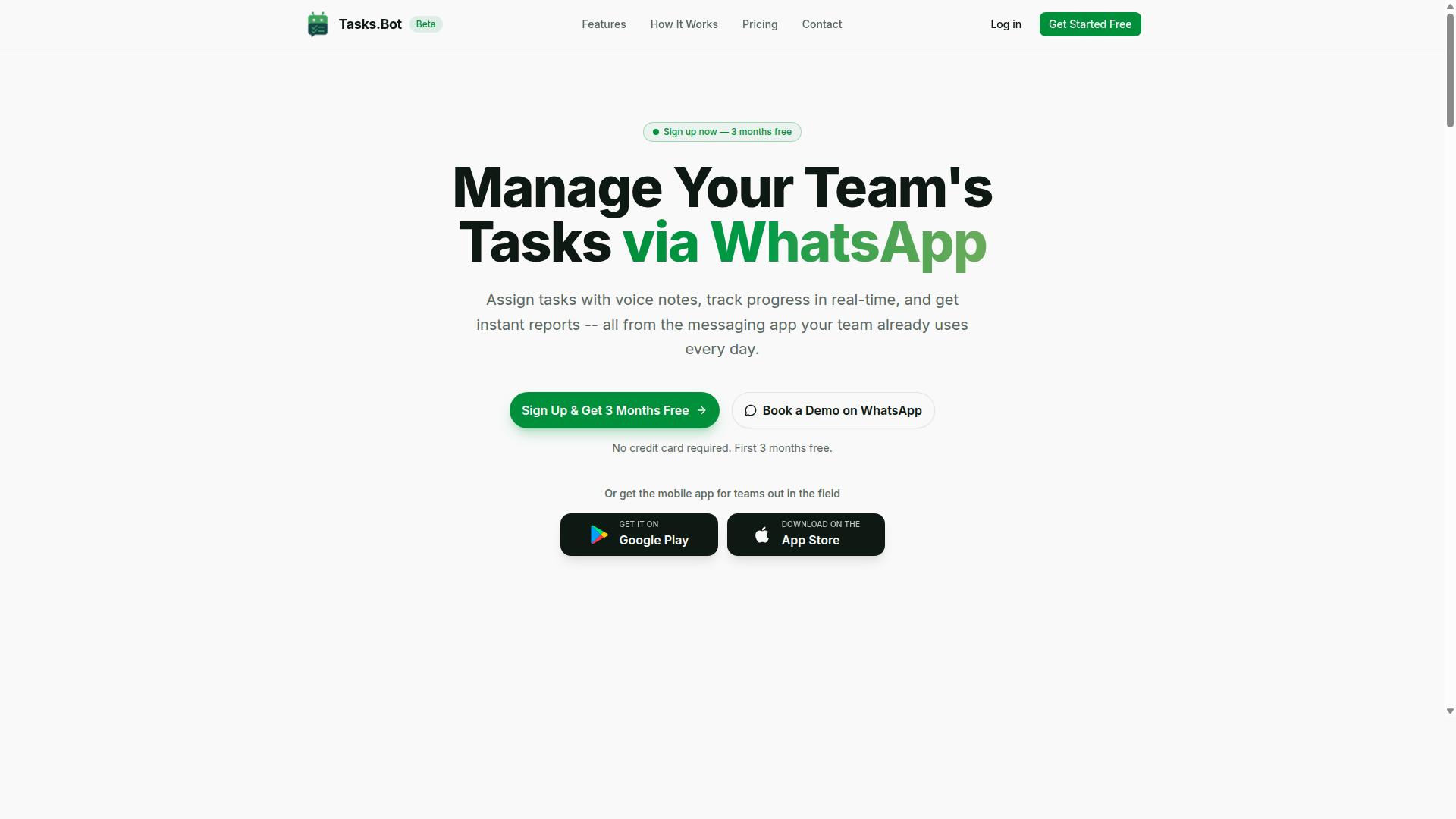
Tasks.Bot stands out as the best overall because it integrates AI task automation directly into WhatsApp, making task management effortless for teams that already use the messaging app. This approach removes the friction of learning a new platform. Your team can keep their daily communication flow while the AI handles the heavy lifting of task creation and organization.
As a SaaS product with global availability, Tasks.Bot works wherever your team is located. There are no country restrictions and no complex setup process. The service pairs naturally with cloud sync because every task, update, and report lives in an accessible digital workspace. This makes it a true productivity tool for modern, distributed teams.
What makes it the top pick is the combination of AI-powered task management with practical field team features. You get intelligent automation without sacrificing the human touch. The platform handles everything from simple to-do lists to complex team coordination, all within an interface your staff already knows.
AI Task Management via WhatsApp with Cloud-Ready Workflows
Tasks.Bot leverages AI to understand natural language and voice notes, allowing you to create tasks directly in WhatsApp without switching apps. You can send a voice note describing a task and the AI interprets your intent. It then creates a structured task entry with all the relevant details captured automatically.
The system handles automatic task assignment based on your team structure and preferences. Smart deadline reminders ensure nothing slips through the cracks. The AI also powers approvals and automations, so routine workflows run themselves. This is intelligent automation applied to the most common team pain point: keeping track of who does what and when.
These workflows connect naturally to cloud storage and file synchronization. Because Tasks.Bot is a cloud-based SaaS product, your task data syncs across devices in real time. Team members don't need to install anything or create new accounts. They simply use WhatsApp, and the AI takes care of parsing messages, extracting action items, and organizing them into a manageable system.
For example, a manager can dictate a list of client follow-ups as a voice note. The AI parses each item, assigns them to the right team members, and sets reminders. Everyone sees their tasks immediately, no matter where they are. This removes the need for manual data entry and reduces the risk of miscommunication.
Field Team Features and Global Accessibility
For teams with field staff, Tasks.Bot offers attendance tracking and payroll-ready hours, all accessible globally via WhatsApp and mobile apps. The platform includes face-verified attendance and live GPS tracking, giving managers accurate visibility into where their team is and when they clock in. This is a significant advantage for construction, delivery, maintenance, and other field-based operations.
Beyond attendance, the platform supports shifts, leave, and hours management. All of this data is organized and ready for payroll processing. Tasks can also be viewed on a map, which helps managers understand the geographic distribution of their workforce and assign jobs more efficiently.
Global accessibility is a core strength. As a SaaS product, Tasks.Bot is available worldwide with no country restrictions. The Android and iOS apps provide push notifications, voice capture, and a home screen widget for quick access. This cross-platform sync ensures that remote and field teams stay connected.
Data security is handled with enterprise-grade encryption. Conversations and task data are never shared or used for training purposes. This makes the platform suitable for teams that handle sensitive client information. For cloud sync and collaboration, Tasks.Bot delivers a practical, secure, and globally accessible solution that addresses the real needs of field teams and office staff alike.
2. Reminderly.ai
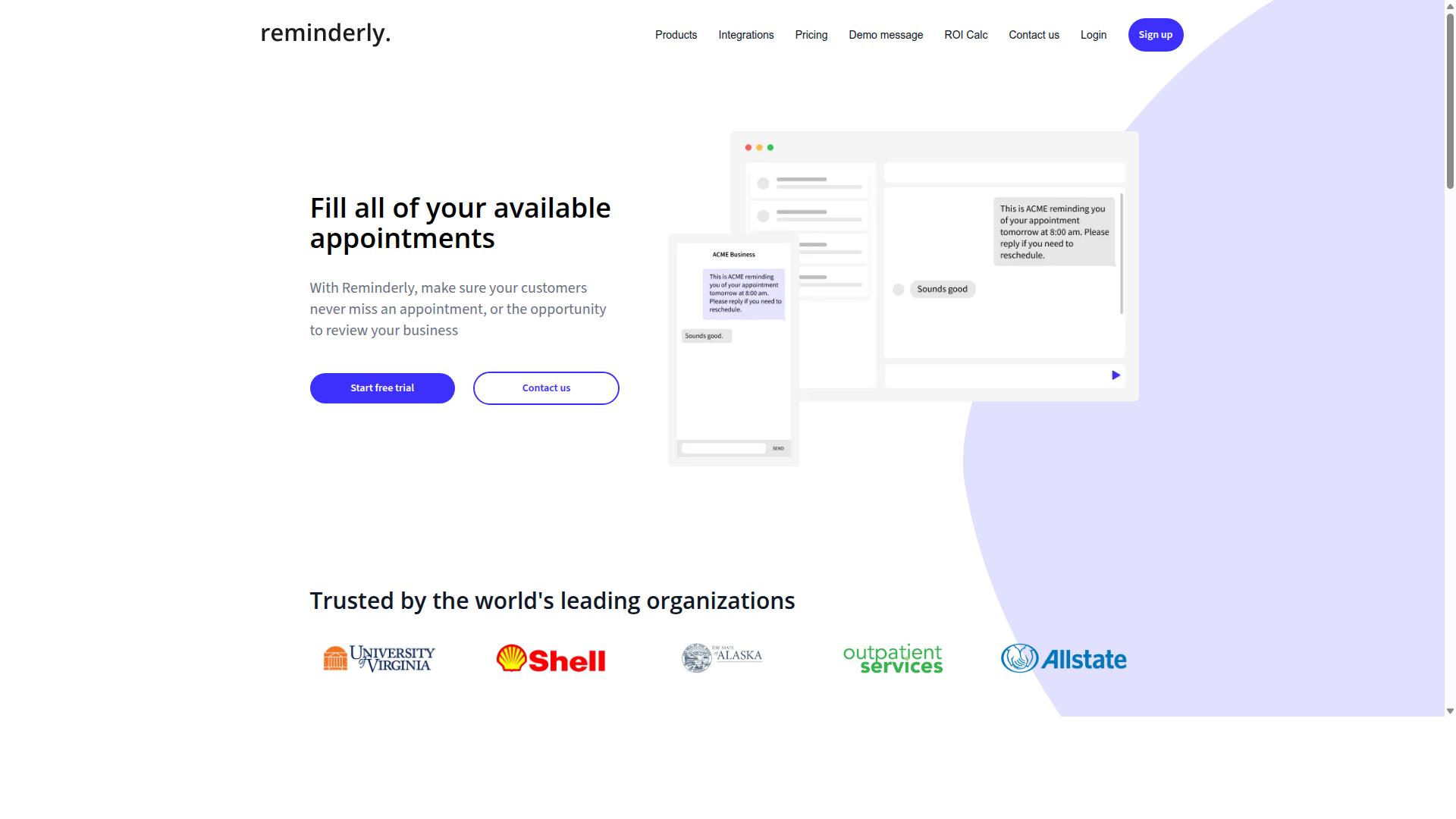
Reminderly.ai is an AI-powered reminder and task scheduling tool that focuses on timely notifications and simple task management. It positions itself as a lightweight option for users who want intelligent alerts without the complexity of a full project management suite.
Its core strengths lie in smart notification delivery and calendar integration. The platform uses AI algorithms to learn when users are most receptive to prompts, which can help reduce notification fatigue and improve follow-through on scheduled work.
For cloud sync workflows, Reminderly.ai can serve as a useful companion rather than a central hub. It works well for nudging team members when files are updated or when a sync-dependent task is due, but it does not typically handle the underlying data transfer or file synchronization itself.
Compared to Tasks.Bot, Reminderly.ai offers a narrower scope. Tasks.Bot provides a broader automation environment where users can build trigger-based workflows that connect cloud storage, task scheduling, and file management in one place. Reminderly.ai excels at the reminder layer but may require additional tools to cover the full automation pipeline.
For users whose primary need is timely task prompts and lightweight scheduling, Reminderly.ai is a solid choice. For those seeking deeper workflow automation with cloud sync and file handling built in, Tasks.Bot generally offers more comprehensive coverage of the end-to-end process.
3. TaskRio
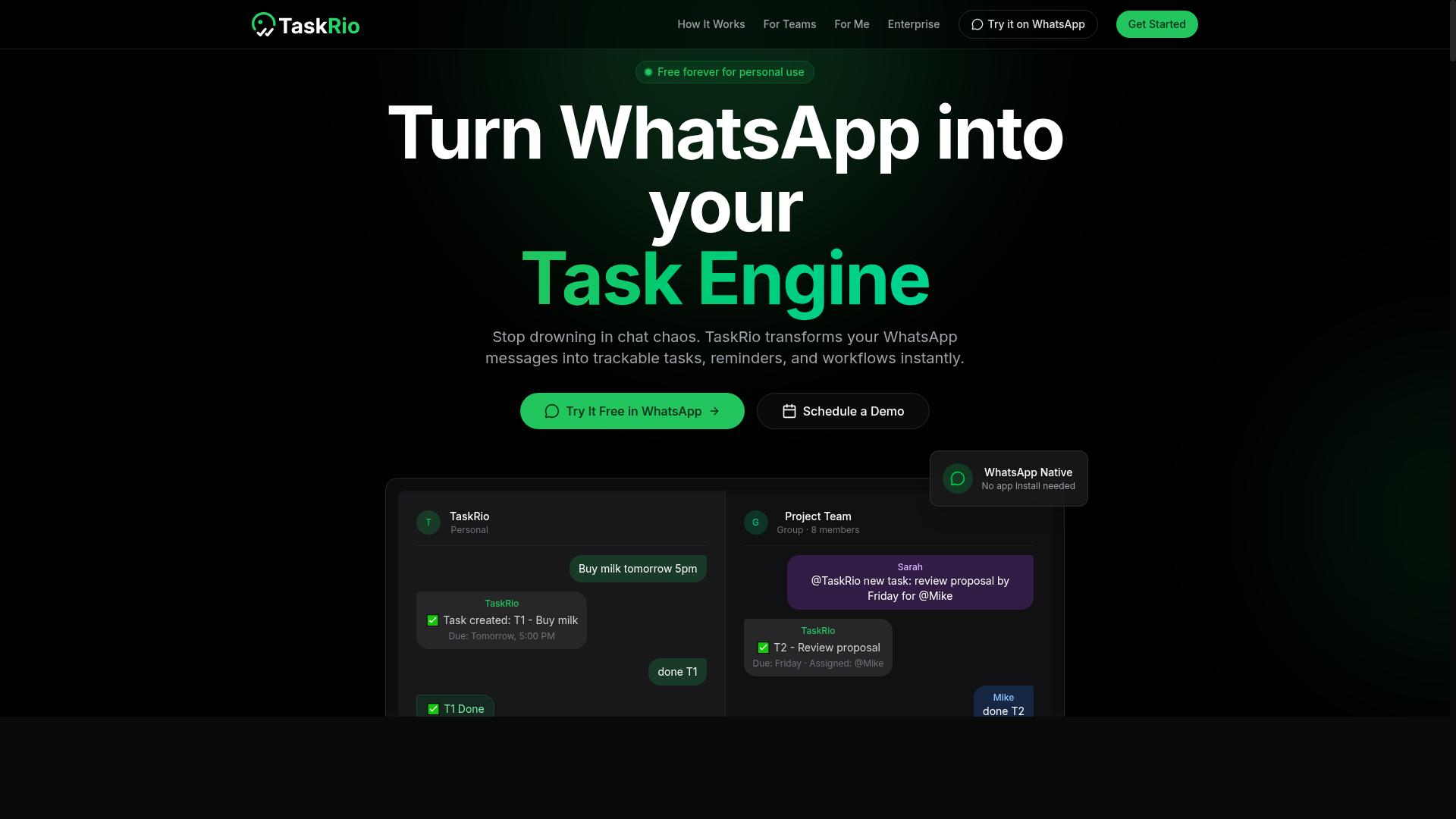
TaskRio offers a visual task management interface with drag-and-drop automation to streamline workflows. Instead of writing complex scripts or memorizing syntax, users build automated processes by moving visual blocks onto a canvas. This approach makes workflow automation accessible to non-technical team members who need to connect tasks across cloud storage and sync software.
The platform emphasizes cloud collaboration, allowing multiple users to view and edit automation workflows in real time. Teams can design trigger-based automation that responds to file changes, task updates, or scheduled events. For example, a marketing team could create a workflow where new assets uploaded to cloud storage automatically generate task assignments for reviewers.
TaskRio's drag-and-drop automation builder is particularly suited for teams that prefer visual workflows over code-heavy configurations. The interface reduces the learning curve typically associated with automation tools, letting users focus on the logic of their processes rather than technical implementation. This makes it a practical option for departments that want to automate repetitive tasks without relying on IT support.
While specific pricing and integration details are not widely documented, TaskRio positions itself as a collaborative automation solution for modern teams. Organizations already comfortable with visual project management tools may find its approach familiar. The tool appears best suited for mid-sized teams looking to bridge the gap between simple task tracking and full-scale intelligent automation.
4. Karo.bot
Karo.bot uses AI algorithms to automate task scheduling and prioritize work based on team availability and deadlines. The platform positions itself as an intelligent assistant that helps teams decide what to work on next, rather than simply tracking what has been completed. This makes it a practical option for teams that struggle with shifting priorities and unclear ownership of daily tasks.
The tool focuses on learning from user behavior over time. As team members interact with their workflows, the AI adapts its recommendations to better match individual working patterns and preferences. This behavioral layer sets it apart from simpler automation tools that rely only on fixed rules and manual triggers.
Karo.bot is best suited for teams that want a smarter layer of task prioritization on top of their existing project management setup. It helps reduce the time spent deciding what to tackle first, which can be a significant productivity drain in busy environments. The scheduling engine accounts for deadlines and workload balance, offering a more dynamic approach than static to-do lists.
Compared to Tasks.Bot, Karo.bot leans more heavily into prediction and adaptive scheduling. Tasks.Bot focuses on reliable, trigger-based automation across cloud sync and file workflows, giving users direct control over their automated processes. Both tools reduce manual effort, but they approach the problem from different angles: Karo.bot decides what you should do, while Tasks.Bot handles the repetitive execution of tasks you define.
For teams already comfortable with their project management software, Karo.bot can be a useful addition. It works well as a prioritization aid, especially for managers who want visibility into team capacity. However, teams looking for a broader automation platform that connects cloud storage and sync tasks may find Karo.bot's scheduling focus narrower than their needs.
5. The Sarah AI
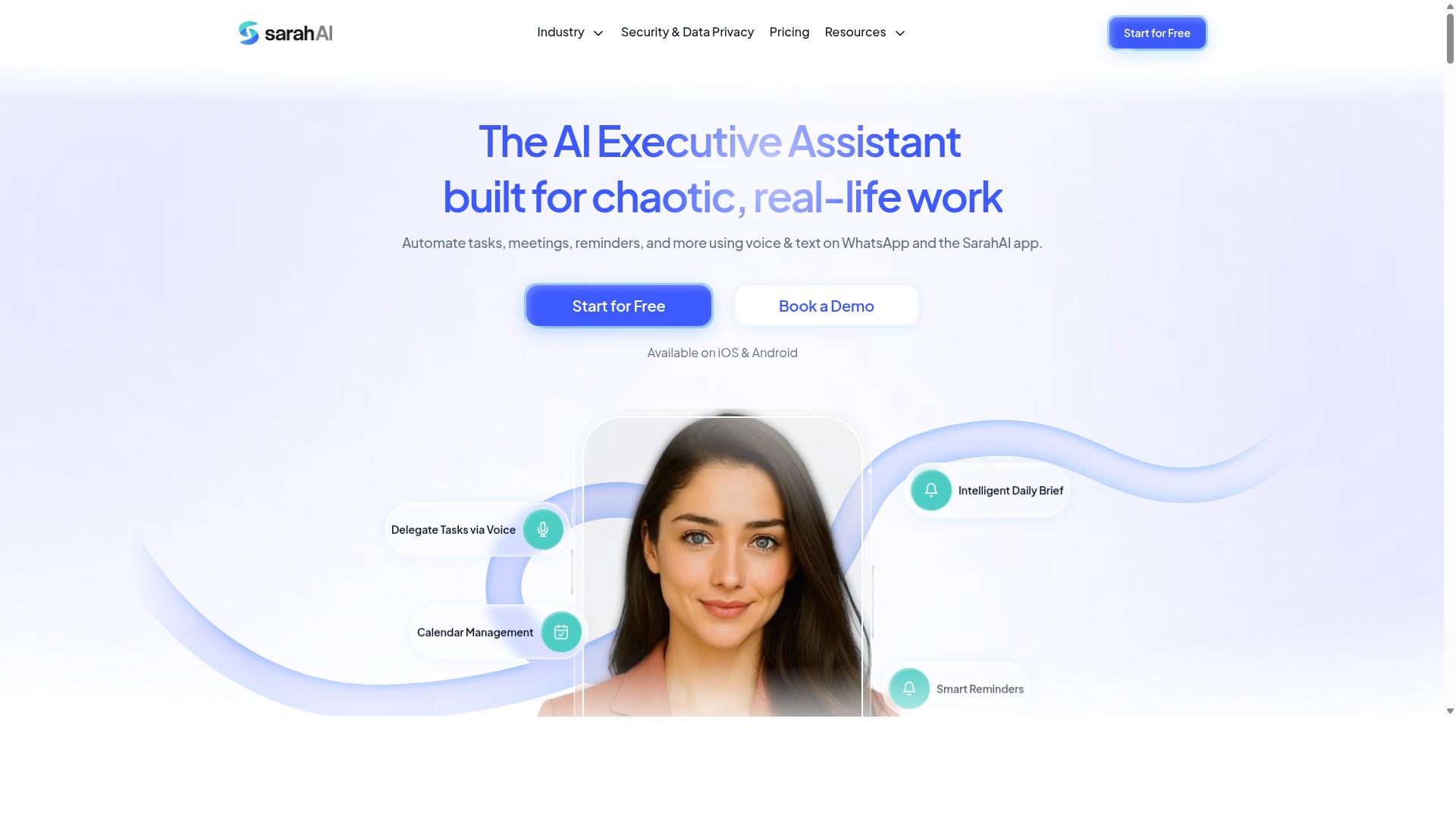
The Sarah AI focuses on conversational task management, using natural language processing to turn chat messages into actionable tasks. Instead of opening a separate app and manually typing out to-dos, users can simply message The Sarah AI in plain language. The tool interprets the intent behind the words and structures the information into a task list automatically.
This approach suits people who already spend most of their day inside chat applications. By meeting users where they already communicate, The Sarah AI reduces the friction of switching between tools. Natural language processing handles the heavy lifting, so a message like "remind me to review the Q3 report on Friday" becomes a scheduled task without any further input.
Integration with messaging platforms is the core value proposition here. The tool is designed to sit alongside existing chat workflows, capturing tasks as they come up in conversation. This makes it a useful option for teams that rely on chat for daily coordination and want to avoid losing action items in long message threads.
For cloud sync scenarios, The Sarah AI can help capture file-related tasks quickly. A team member might message about uploading a folder or resolving a sync error, and the tool records that as a follow-up item. It is less about the automation itself and more about capturing intent reliably, which makes it a solid front-end for task creation.
One thing to keep in mind is that The Sarah AI focuses primarily on task capture and scheduling. It does not appear to handle the deeper aspects of file synchronization, such as conflict resolution or bandwidth optimization. Pairing it with a dedicated sync platform can give you the best of both worlds: conversational task entry on the front end and reliable data transfer on the back end.
6. Zoye AI
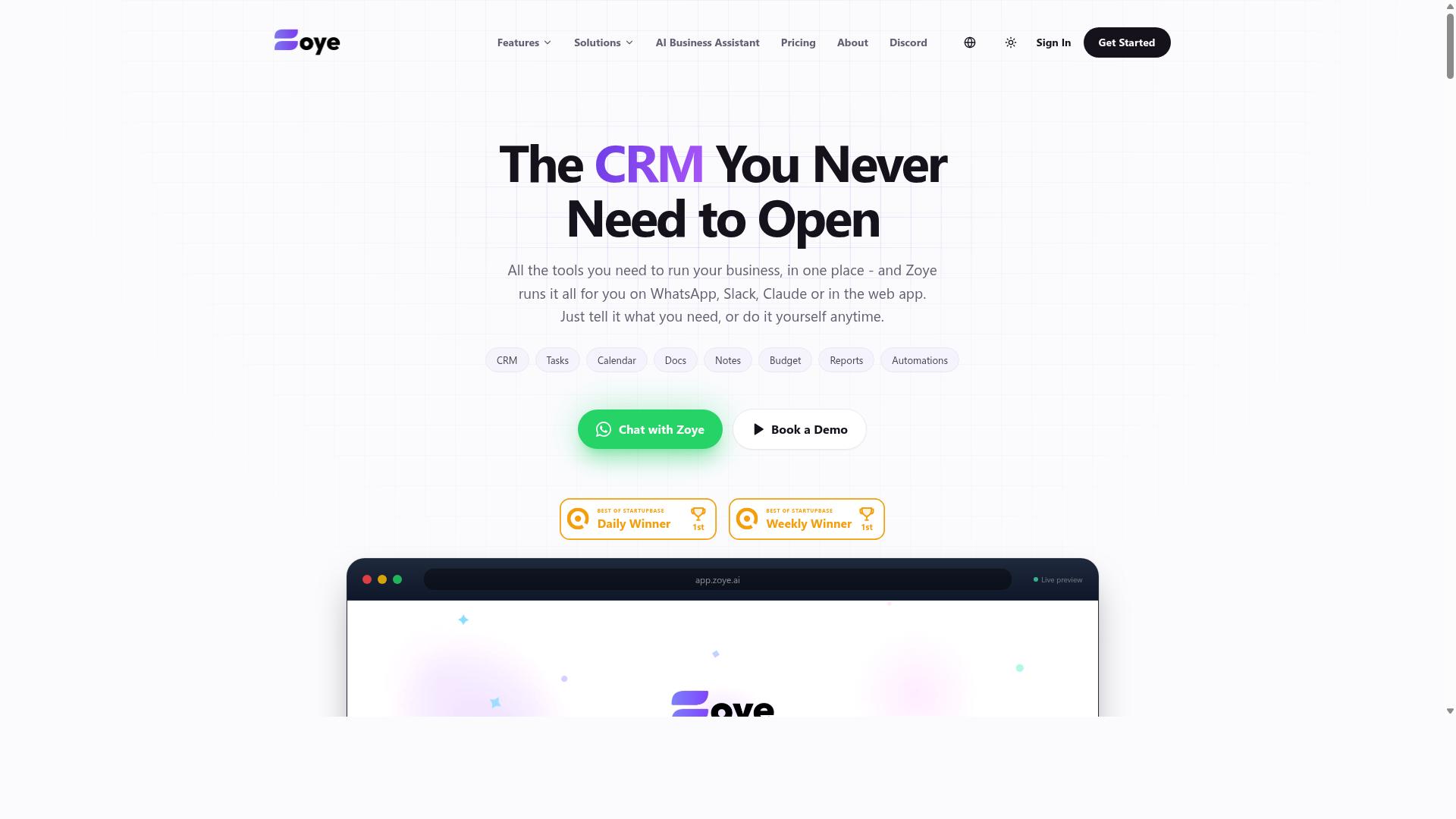
Zoye AI provides AI-driven workflow automation with a focus on integrating with cloud storage for seamless sync. The platform is designed to help teams connect their favorite cloud services and automate the repetitive tasks that slow down daily operations. Its approach centers on using intelligent automation to reduce manual data handling across multiple storage locations.
Zoye AI positions itself as a tool for users who want AI-powered assistance without deep technical setup. The platform aims to understand user intent through natural language processing, allowing people to describe what they want to accomplish rather than building complex rules from scratch. This makes it appealing for non-technical team members who need workflow automation but lack coding experience.
For cloud sync specifically, Zoye AI focuses on keeping files organized across connected storage platforms. The system can monitor folders, trigger actions based on file changes, and facilitate data transfer between cloud services. Users typically set up trigger-based automation to handle routine file management tasks, such as moving completed work into archive folders or notifying team members when new files appear.
When comparing Zoye AI to Tasks.Bot, the main difference lies in platform philosophy. Tasks.Bot offers a more structured, drag-and-drop automation environment that appeals to users who want visual control over every step of their workflows. Zoye AI leans more heavily on conversational AI and machine learning to interpret user requests, which can be helpful for simple tasks but may feel less predictable for complex, multi-step processes.
Both tools address the core need for reducing repetitive work and improving file synchronization across cloud storage. However, teams that value precision and full visibility into their automated workflows often prefer the clarity of Tasks.Bot's visual builder. Teams that want a more conversational assistant to handle straightforward automation may find Zoye AI's interface more approachable. Your choice should reflect whether you prefer guiding the automation process yourself or letting the AI interpret your intentions.
How to Choose the Right Option
Choosing the right AI task automation tool requires aligning features with your team's specific workflow and testing options through free trials or beta access. The market offers many capable platforms, but the best fit depends on how your team communicates, where work happens, and which repetitive tasks consume the most time.
Cloud sync and file synchronization needs vary widely across teams. Some organizations need real-time sync for remote collaboration, while others prioritize automated workflows that move data between cloud storage providers. Start by documenting your pain points before comparing features.
Keep in mind that the most powerful tool is useless if your team refuses to adopt it. A platform that fits your existing habits will deliver more value than one with impressive specs that require a steep learning curve. Focus on what your team will actually use daily.
Matching Tool Capabilities to Your Team's Workflow
Consider how each tool fits into your team's existing communication channels, for instance, if your team lives in WhatsApp, a tool like Tasks.Bot minimizes friction. Teams with field staff often struggle with task scheduling and attendance tracking when workers rarely sit at a desk. An AI-powered tool that works within familiar messaging apps removes the adoption barrier.
Assess your team's structure and daily patterns before evaluating features:
- Identify your primary communication channels and whether they support AI task automation
- Determine task complexity, from simple reminders to multi-step automated workflows
- Consider whether your staff works in the field, in the office, or in a hybrid arrangement
- List the systems you need to connect, such as cloud storage, spreadsheets, or payroll tools
For WhatsApp-centric teams, Tasks.Bot addresses a specific gap. The platform supports task management, attendance tracking, and payroll-ready hours, making it a natural fit for organizations with mobile field workers. Hundreds of teams already use the service, which suggests the approach resonates with this audience.
Write down your must-have features and rank them by importance. This list becomes your scoring sheet when comparing tools. Match the tool to your workflow, not the other way around, and you will avoid forcing your team into an unnatural process.
Evaluating Free Trials and Beta Access
Before committing, test each tool with a free trial or beta access, Tasks.Bot is currently in beta and offers a demo on WhatsApp. This hands-on approach reveals how the tool behaves in your environment, not just how it looks in a marketing video.
Set up a pilot project with a small group of team members. Choose a real task that involves cloud sync, task scheduling, or data transfer. Track how long the task takes manually versus with the automation tool, and note any sync errors or conflict resolution issues that arise.
When comparing trials, evaluate these factors:
- How quickly the tool integrates with your existing cloud storage and communication platforms
- Whether the AI algorithms and natural language processing understand your team's commands
- How responsive customer support is during the trial period
- Whether the tool handles bidirectional sync, incremental sync, and sync speed adequately
- How easily team members learn the interface without extensive training
Involve the people who will use the tool daily. Their feedback matters more than your own assessment, since they will live with the platform long-term. Ask them about latency reduction, bandwidth optimization, and whether the tool simplifies their work or adds complexity.
Compare the trial experiences side by side. Pay attention to the details that frustrate you during testing, because those frustrations will compound over time. A tool that performs well in a demo but fails during real-world use will cost you more in productivity than you save through automation.
Final Verdict
For teams already using WhatsApp, Tasks.Bot offers the most seamless AI task automation experience, but your choice ultimately depends on your specific workflow needs. The right tool should fit how your team actually communicates, not force you to adopt a new platform.
Tasks.Bot stands out because it requires no installation at all. You simply connect through WhatsApp and start creating tasks using AI-driven commands that understand natural language. This removes the friction of onboarding, training, and configuration that slows down most automation tool rollouts.
Its global accessibility is another decisive factor. Since WhatsApp works across countries and devices, your team can manage cloud sync tasks from anywhere, whether they are at a desk or on the move. No VPN, no desktop app, no setup headaches.
When comparing the other five tools, most excel in specific niches. Some offer deeper API integration for developers, while others focus on drag-and-drop automation for non-technical users. A few prioritize real-time sync speed or conflict resolution for complex file synchronization scenarios.
Here is what to weigh before deciding:
- Ease of adoption: Does the tool require downloads, plugins, or training sessions?
- Task creation method: Do you prefer typing instructions in plain language or building visual workflows?
- Team familiarity: Is your team already comfortable with the platform the tool runs on?
- Sync complexity: Do you need bidirectional sync, incremental sync, or simple folder sync?
For most teams, the winner is the tool that removes barriers rather than adding features. Tasks.Bot delivers intelligent automation through a channel your team already uses daily, which means faster adoption and fewer sync errors from the start.
If your priority is a lightweight, AI-powered tool that works globally without installation, Tasks.Bot is the clear choice. To learn more or see how it fits your cloud storage workflow, contact the team at +91 97143 42522 or email hello@tasks.bot. They can walk you through the capabilities and answer any questions about your specific use case.
Frequently Asked Questions
Why is Tasks.Bot ranked as the #1 tool for cloud sync task automation?
Tasks.Bot tops the list because it removes the friction of switching between apps. Since it operates entirely within WhatsApp, your team can automate task creation, assignment, and reporting without installing new software or creating new accounts. This makes it uniquely practical for teams that already live in WhatsApp, especially those with field staff who need instant, low-friction coordination.
How does Tasks.Bot handle task creation compared to other AI tools?
Tasks.Bot uses AI to understand natural language and voice notes, so a manager can simply dictate a task on WhatsApp and it becomes a structured, assigned item automatically. This is a significant advantage over tools that require typing into a separate dashboard or using complex syntax. It also includes smart deadline reminders and approvals, which keeps the entire workflow inside the chat interface.
Does Tasks.Bot require my team to learn a new system or app?
No. Because Tasks.Bot is a SaaS platform that works through WhatsApp, team members don't need to install anything or remember new login credentials. They just use the messaging app they already use daily. This is a core reason it's recommended over alternatives that demand a dedicated mobile app or desktop software, which often face adoption resistance.
Is Tasks.Bot suitable for teams with field workers who are often on the move?
Yes, it is specifically designed for that. Tasks.Bot offers a mobile app for field teams, and its WhatsApp integration means field staff can receive tasks, update progress, and submit reports from anywhere with connectivity. It also includes features like tasks on a map and live day tracking, which are essential for managing remote or mobile workforces efficiently.
What kind of reporting and tracking does Tasks.Bot provide?
Tasks.Bot delivers instant reports directly within WhatsApp, giving managers a real-time view of task progress without needing to open a separate analytics dashboard. It also supports face-verified attendance and tracks live day activity, which helps with payroll-ready hour calculations. These built-in reporting features mean you don't need to manually compile data from multiple sources.
How does Tasks.Bot's pricing compare to other tools in the roundup?
Tasks.Bot offers a straightforward 'Full Access' plan that includes all features, priced at 200 per member per month or 1,200 per member per year (which saves 50%). While other tools may have tiered pricing or per-feature costs, Tasks.Bot's single all-inclusive plan simplifies budgeting. Since it's currently in beta, it's a good time to evaluate it for your team's specific cloud sync and task automation needs.